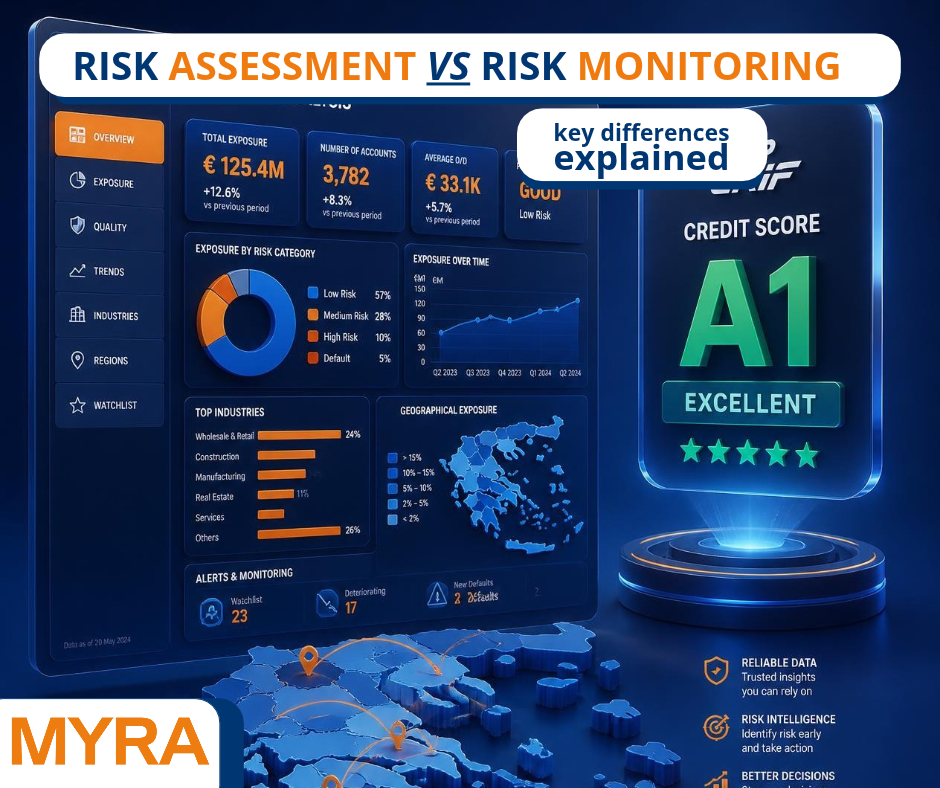
Credit Risk Assessment vs Credit Risk Monitoring: Key Differences Explained
Two crucial components of an effective Credit Risk Management framework are credit risk assessment and credit risk monitoring. While these activities are closely connected and often work together, they serve different purposes throughout the credit risk lifecycle.
Understanding the distinction between the two is essential for organizations that want to protect cash flow, reduce the likelihood of bad debt, and make informed decisions across their customer and supplier portfolios.
What Is Credit Risk Assessment?
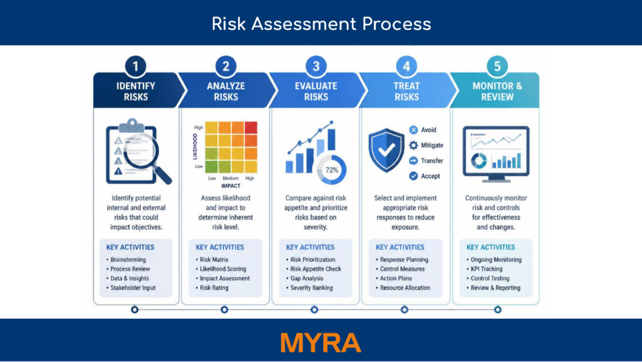
Credit risk assessment is the process of identifying, analyzing, and evaluating the risk that a customer, supplier, or business partner may fail to meet its financial obligations.
A typical credit risk assessment involves collecting and analyzing financial, behavioral, and market information, including financial statements, payment performance, credit history, industry dynamics, corporate structure, and external economic factors. Based on this analysis, organizations assign risk ratings that help determine the level of credit exposure they are willing to accept.
To ensure consistency and objectivity, businesses often rely on credit scoring models, risk matrices, probability of default indicators, and standardized assessment methodologies.
Key Objectives of Credit Risk Assessment
To ensure consistency and objectivity throughout the evaluation process, credit risk assessment is driven by several primary goals:
- Identify existing and potential sources of credit risk
- Evaluate the creditworthiness of customers and business partners
- Prioritize exposures based on probability of default and potential impact
- Reduce financial losses and operational disruptions caused by unpaid invoices
Credit risk assessment is typically performed during customer onboarding, credit limit reviews, portfolio evaluations, or whenever significant changes occur within a company or market environment.
What Is Risk Monitoring?
Risk monitoring is the ongoing process of tracking credit risk exposure over time to identify changes in the financial health and risk profile of customers, suppliers, and counterparties.
Unlike credit risk assessment, which provides a snapshot of risk at a specific moment, risk monitoring delivers continuous visibility into how risk evolves. Since business conditions can change rapidly, relying solely on periodic assessments may leave organizations exposed to unexpected credit events. This is also why the Basel Committee on Banking Supervision – the international body that sets global standards for banking regulation – identifies ongoing monitoring as one of the core pillars of a sound credit risk management framework, alongside credit-granting and control processes.
Through automated alerts, portfolio dashboards, risk indicators, and continuous data updates, companies can detect early warning signs such as deteriorating financial performance, worsening payment behavior, legal proceedings, credit score changes, or increases in probability of default (PD).
Key Objectives of Risk Monitoring
To track portfolio shifts and maintain constant visibility over evolving exposures, the monitoring process focuses on several core goals:
- Track changes in credit risk exposure across the portfolio
- Detect emerging risks at company, group, or corporate structure level
- Support day-to-day credit and collections decisions
- Enable timely corrective actions before losses materialize
Risk monitoring transforms credit risk management from a periodic review process into a continuous and proactive discipline.
Credit Risk Assessment vs Credit Risk Monitoring: The Core Differences
Although both activities support risk management, they answer different questions.
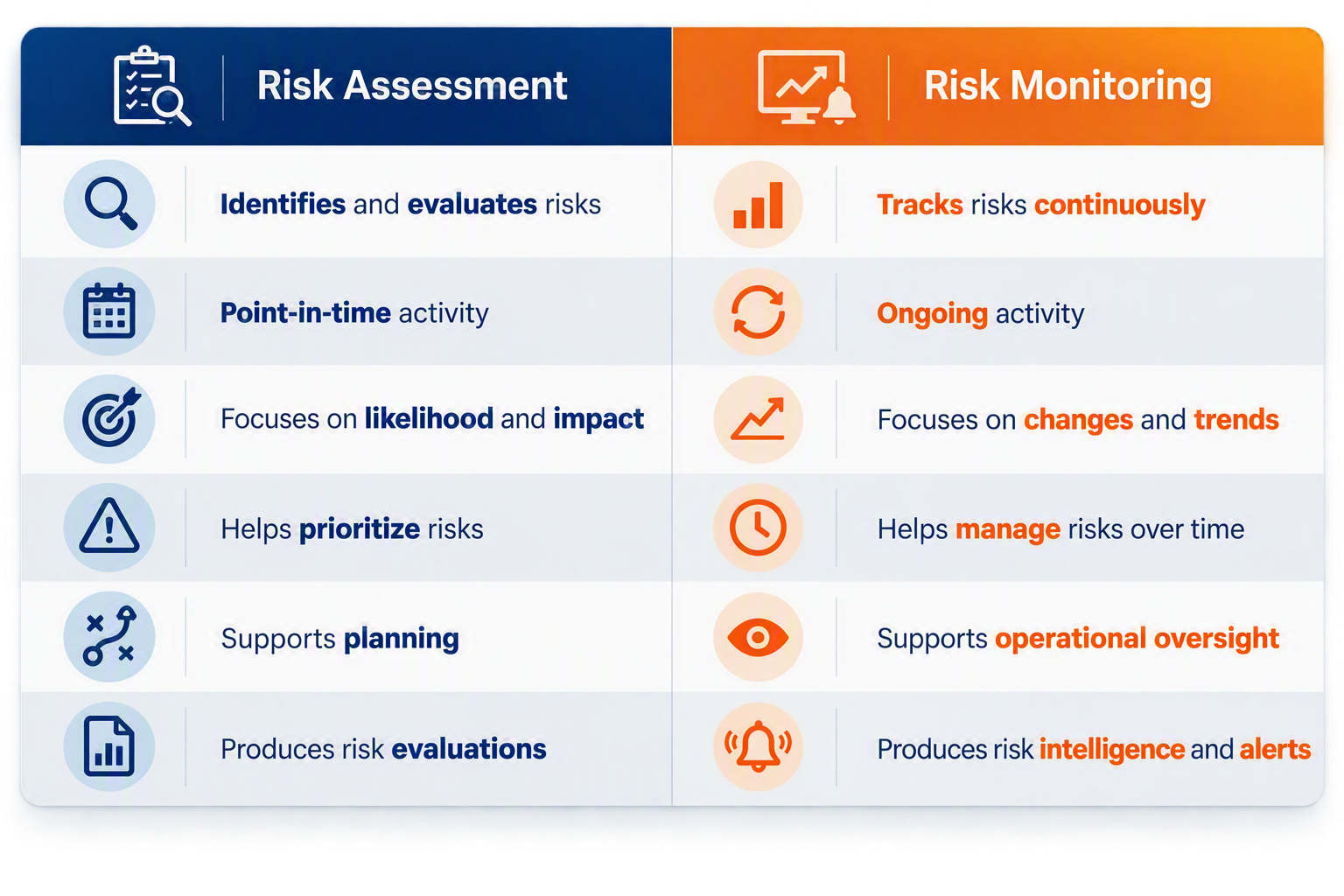
In simple terms:
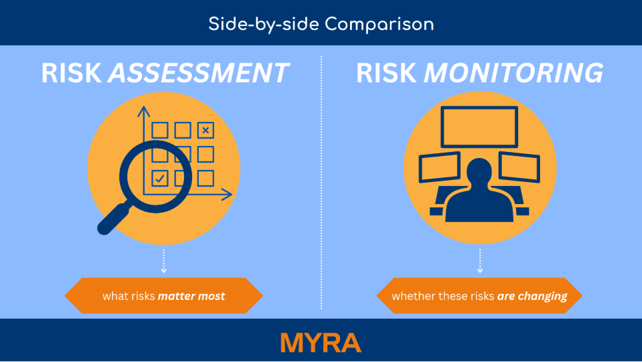
- Credit risk assessment tells you which customers, suppliers, or counterparties represent the highest risk.
- Credit risk monitoring tells you whether their risk profile is improving or deteriorating over time.
Organizations need both capabilities to maintain effective control over their credit exposure.
Why Organizations Need Both
Many organizations still approach credit risk assessment as a one-time exercise. However, credit risk is highly dynamic and can be influenced by factors such as economic downturns, inflationary pressures, industry disruption, supply chain issues, liquidity constraints, ownership changes, or shifts in market conditions.
Without continuous monitoring, even the most accurate assessment can quickly become outdated. A customer that appeared financially strong six months ago may now show weakening payment behavior, declining profitability, or increased leverage.
At the same time, monitoring credit risk without a structured assessment framework can generate large volumes of data without providing clear priorities for action.
The most mature organizations combine both approaches:
- Assess credit risk to understand exposure and priorities.
- Monitor credit risk continuously to maintain visibility.
- Review changes and emerging warning signals regularly.
- Adjust credit limits, payment terms, and mitigation strategies when necessary.
This integrated approach helps organizations reduce losses, improve cash flow protection, and strengthen portfolio resilience.
How MYRA Supports Risk Assessment and Risk Monitoring
MYRA helps organizations transform risk assessment into a structured, data-driven process by providing a comprehensive view of the companies within their portfolio.
Through the Risk Analysis service, MYRA evaluates key risk factors such as financial strength, creditworthiness, payment behavior, industry and geographic exposure, credit limit risk, and probability of default. By combining these indicators into intuitive visual tools, including distributions, matrices, trends, and the user’s upload outstanding amounts, MYRA enables businesses to identify vulnerabilities, compare risk levels across their portfolio, and make more informed decisions.
This approach turns fragmented data into risk intelligence, helping organizations allocate resources more effectively, reduce exposure, and support strategic growth.
Continuous Risk Monitoring with MYRA
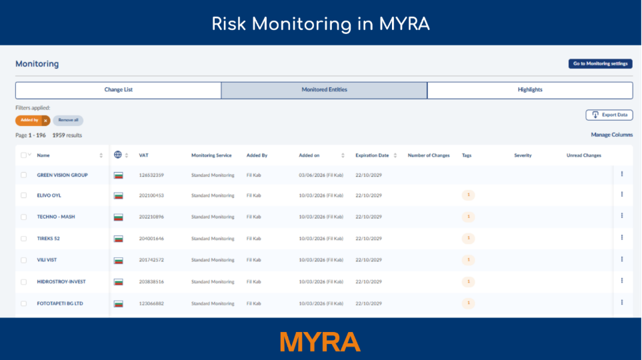
Risk conditions can change rapidly, making continuous monitoring essential for effective risk management. MYRA allows businesses to move beyond periodic assessments by providing ongoing visibility into changes affecting customers, suppliers, and business partners.
Combined with the Monitoring service, Risk Analysis allows users to track updates on critical risk parameters in real time. This continuous flow of risk intelligence helps organizations detect early warning signs, respond proactively to emerging threats, and avoid costly surprises.
By monitoring risk as it evolves, MYRA supports faster decision-making, strengthens portfolio resilience, and helps businesses maintain confidence in an increasingly dynamic and uncertain environment.
A Proactive Approach to Risk Management
Credit risk assessment and credit risk monitoring are not competing processes. They are complementary activities that work together to support a mature and effective credit risk management strategy.
Credit risk assessment provides the foundation for understanding who represents risk and how significant that risk may be. Credit risk monitoring ensures that organizations remain informed as those risks change over time.
By combining both approaches, businesses can make better-informed credit decisions, protect cash flow, reduce bad debt exposure, and respond more effectively to emerging risks.
As credit environments become increasingly volatile and interconnected, organizations need tools and processes that support both comprehensive assessment and continuous monitoring, ensuring that credit risk management remains proactive rather than reactive.
Ready to see how you can assess and monitor credit risk easily? Try MYRA for free and discover its full potential.
Ready to see how you can assess and monitor credit risk easily?
Try MYRA for free and discover its full potential.
FAQs
How often should credit risk be reassessed?
There is no universal rule: lower-risk accounts are often reviewed annually, while higher-risk or high-exposure accounts may need quarterly or real-time review. Rather than relying on fixed review cycles, MYRA continuously tracks exposure and automatically alerts you when a customer’s risk profile changes, so reassessment happens exactly when it’s needed.
Who is responsible for credit risk assessment and monitoring within a company?
Responsibility typically sits with the credit or risk management function, often working closely with finance and sales teams that hold direct costumer relationships. As portfolios grow, many organizations centralize this through a shared platform like MYRA, giving different teams the same real-time view instead of relying on scattered spreadsheets.
What data sources are used for credit risk monitoring?
Effective monitoring typically draws on financial statements, payment behavior, public records, negative news, legal proceedings, and industry benchmarks. MYRA aggregates these sources into a single dashboard, so risk signals don’t need to be manually cross-checked across multiple systems.