
Why Portfolio Optimization Has Become a Business Priority
How to Optimize Your Company Portfolio Management with Risk Analysis
Managing a company portfolio is no longer just about identifying growth opportunities. Organizations must also understand the risks associated with every customer or supplier they choose to include in their portfolio.
Without a structured approach to risk evaluation, businesses may expose themselves to unnecessary financial losses, or concentration risks.
This is why risk analysis has become a fundamental component of company portfolio management. Rather than relying on assumptions or past performance alone, companies can use data and analytics to gain a clearer view of potential risks and make more informed decisions.
Understanding Risk Analysis in Company Portfolio Management
Risk analysis is the process of evaluating the financial stability, reliability, and potential vulnerabilities of companies. It helps organizations understand where risk exists and how severe it might be.
Comprehensive risk assessment typically considers multiple factors, including:
-
Financial strength and creditworthiness
-
Payment behavior and commercial reliability
-
Industry-specific risks
-
Probability of default or business failure
By examining these elements together, businesses can build a more complete picture of their portfolio and identify areas that require attention.
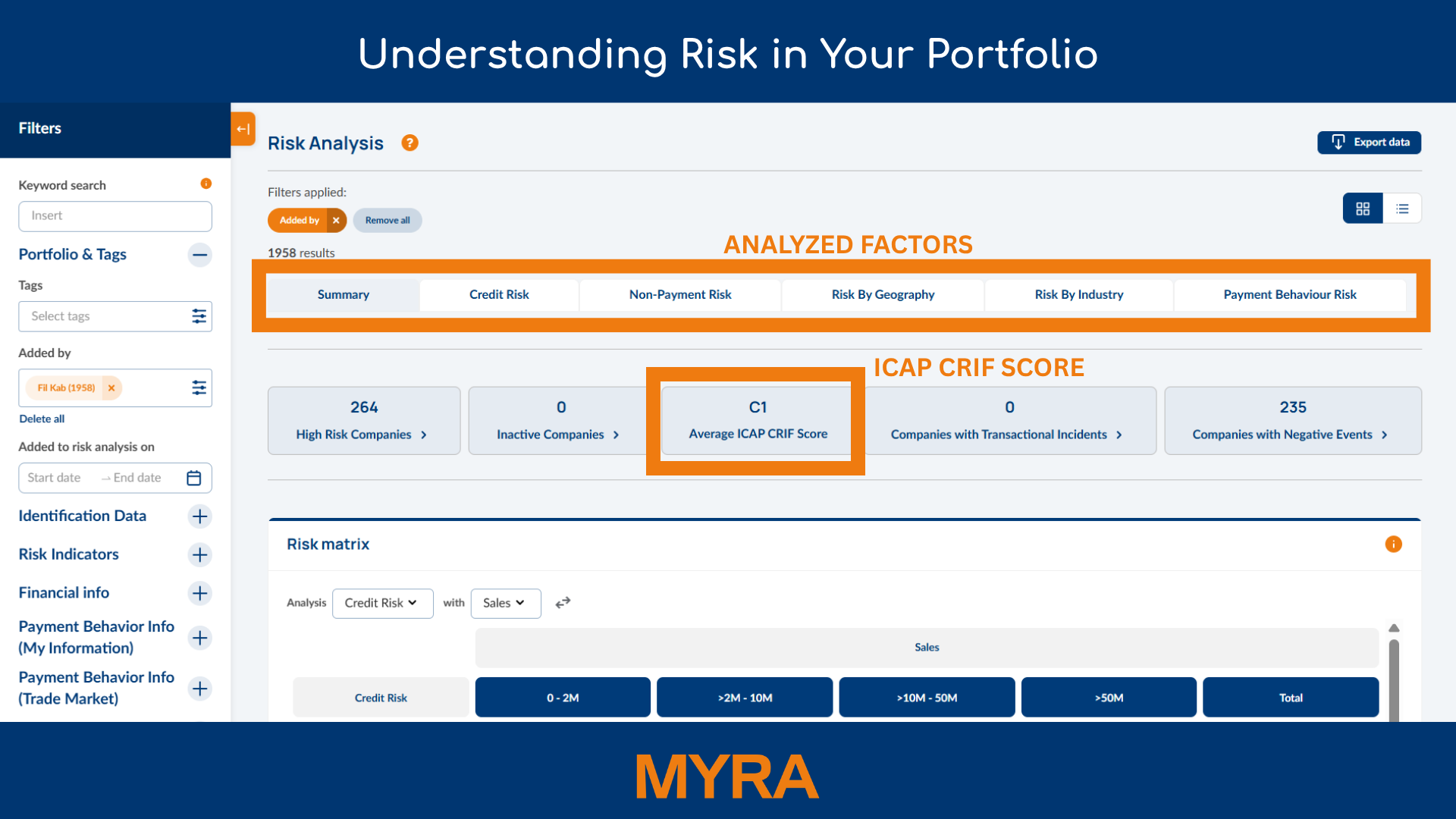
MYRA is the best platform for evaluating the state of your portfolio. Once you identify the companies that you want to assess, you can “send” them to MYRA’s Risk Analysis section. There, the factors mentioned above will all be examined and mixed by using tools like distributions, matrixes, and trends.
Some MYRA-specific capabilities, such as the ICAP CRIF Score, serve as a powerful credit risk intelligence engine, enabling users to instantly assess the risk profile of individual companies and gain a comprehensive view of the total risk exposure across their portfolio.
The score is issued by** ICAP CRIF Credit Rating**, an ESMA-certified Credit Rating Agency, providing a reliable and independent benchmark for credit risk evaluation.
Leveraging Data for Better Decision-Making
Portfolio optimization becomes significantly more effective when supported by real-time data.
Modern risk management platforms like MYRA allow companies to move beyond static reports and gain continuous visibility into portfolio performance. Instead of conducting periodic reviews, organizations can monitor risk indicators as they evolve.
-
Benefits of a data-driven approach include:
-
Faster identification of emerging risks
-
More accurate decision-making
-
Reduced manual analysis
With access to always live and reliable information (ICAP CRIF data paired with client’s own data), businesses can respond more quickly to changing conditions and maintain a healthier portfolio over time.
Continuous Monitoring: Turning Insights into Action
Risk analysis should not be considered a one-time exercise. Company portfolios evolve constantly, and so do the risks associated with them.
A business partner that appears financially stable today may face difficulties tomorrow due to market changes, operational challenges, or industry disruptions.
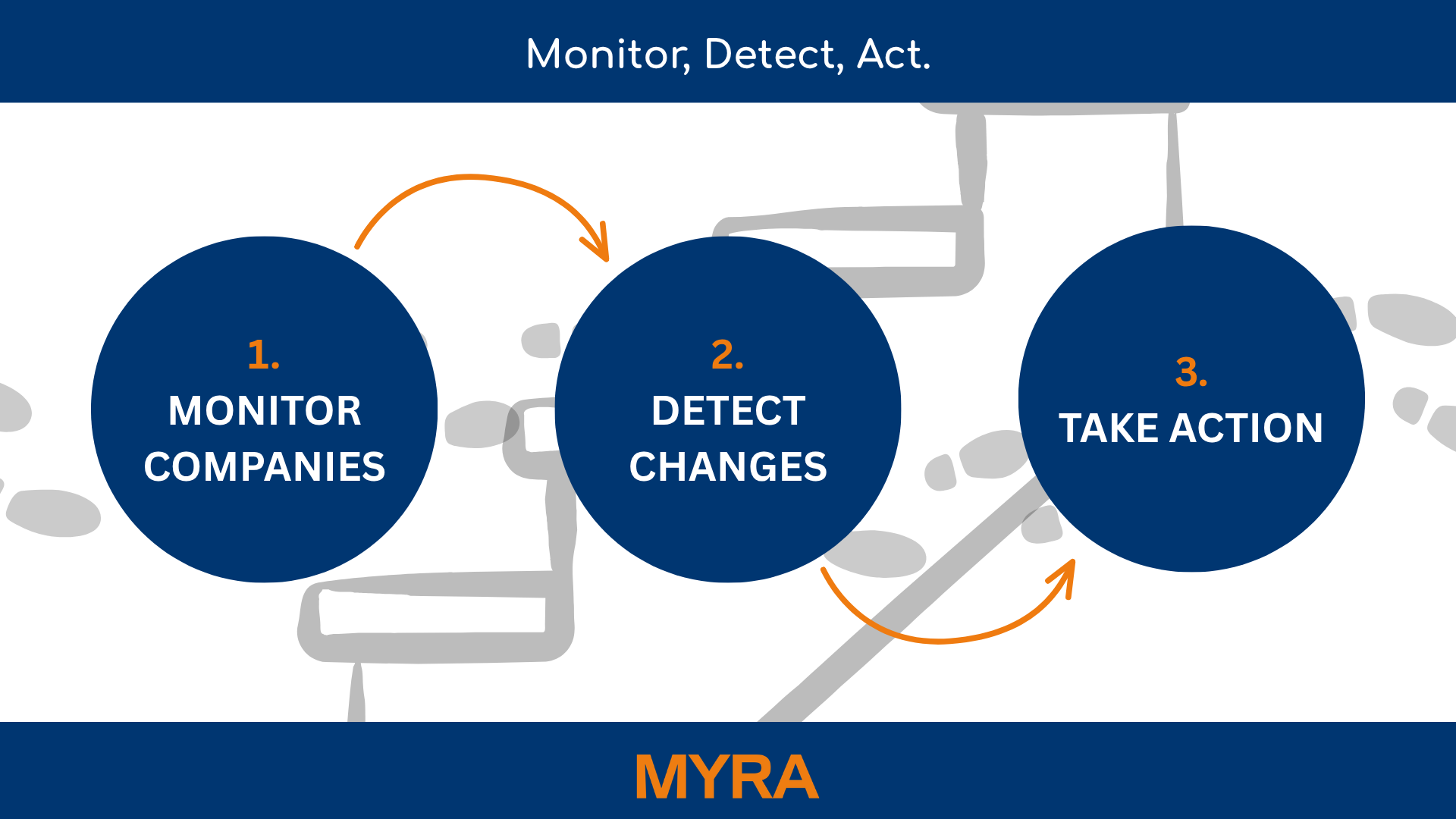
Continuous monitoring helps companies identify changes in creditworthiness, detect early signs of financial deterioration, and proactively adjust portfolio strategies to manage risk more effectively.
With MYRA, this is also possible by requesting the company monitoring service directly from the Risk Analysis section. By maintaining ongoing visibility, businesses can act before issues escalate and protect their long-term objectives.
Optimize Your Portfolio with Smarter Risk Analysis
Portfolio optimization starts with visibility. By combining risk analysis, diversification strategies, continuous monitoring, and data-driven insights, businesses can reduce exposure while maximizing opportunities. MYRA and its capabilities could be the gateway for a business to evolve.
With the right tools and methodologies, organizations gain the confidence to make informed decisions, protect their investments, and build portfolios that are both resilient and positioned for growth in an increasingly complex business environment.